Energy and commodity trading firms run on systems that never sit still. An E/CTRM platform such as Endur, Findur and Allegro is upgraded, patched and reconfigured many times a year, and any one of those changes can move a regulated report, a position or a number, with no trade placed.
This whitepaper explores why constant change has become a hidden regulatory risk, and what it takes to prove a change is safe before go-live, not after.
| 8-minute read
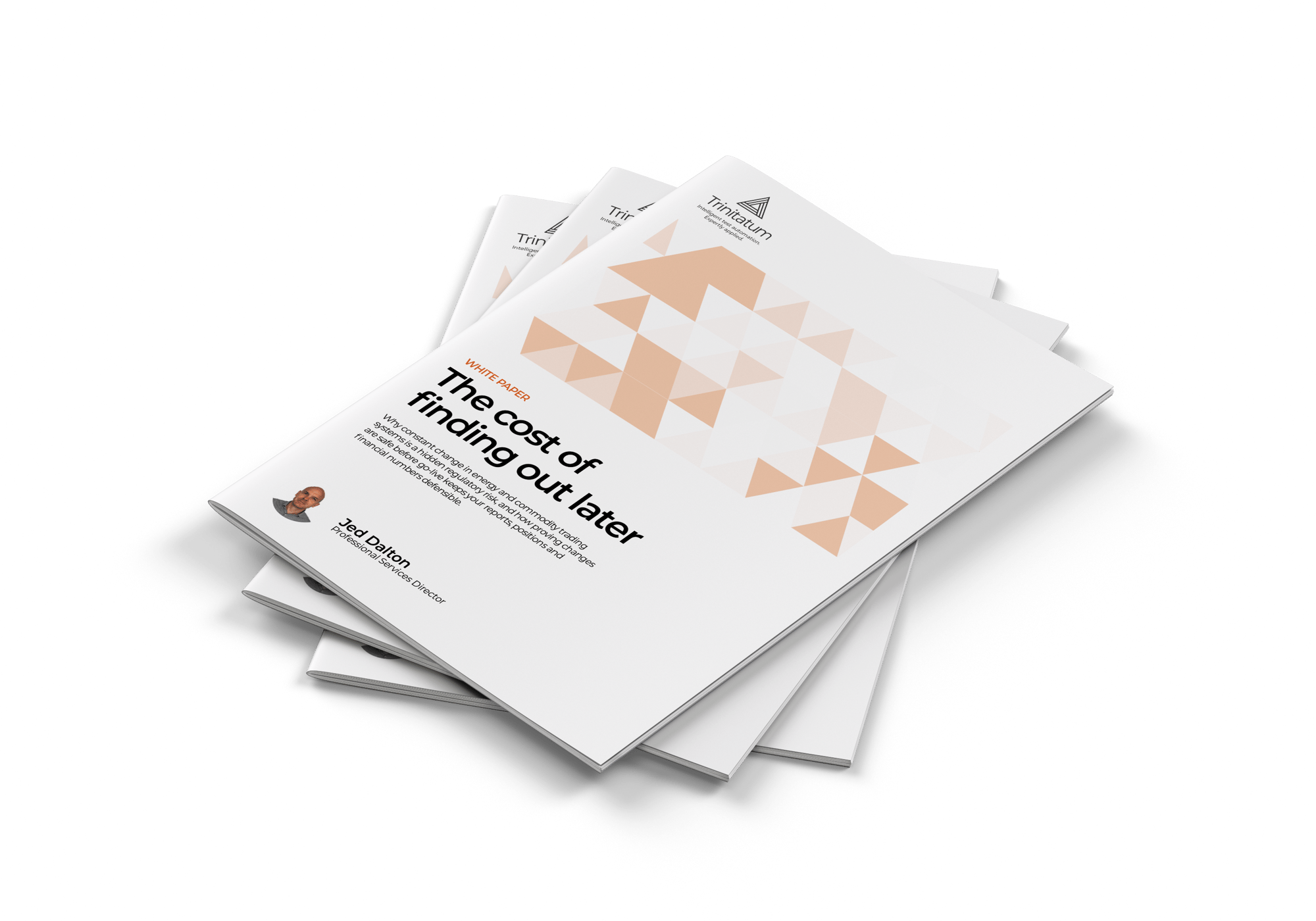
You usually find out later, in a rejected report, a breached limit, an audit finding or a regulator's letter. By then it isn't the cost of testing you're facing, it's the cost of remediation, penalty and reputation.
Download your copy to learn how to:

This whitepaper is written for anyone accountable for regulated outputs in energy and commodity trading, including:
- Compliance and regulatory reporting leads
- Internal Audit
- CFOs and financial controllers (SOX)
- Heads of Market Risk
- Trading IT and change management
- Programme and delivery leaders responsible for upgrades.
The cost of later is the one nobody budgets for.